Issue 22
Rocket Lab’s Neutron delay reveals Asia’s real composites opportunity
When Rocket Lab delayed Neutron’s first flight to 2027 because of voids in a carbon-composite tank dome, my first instinct was: here is Asia’s opening. If composite manufacturing can push a leading US launch company’s first flight from early 2026 into 2027, surely manufacturers in Japan, Korea, Malaysia and Singapore can step in.
That instinct was wrong—or at least incomplete.
The more I looked, the clearer it became that rocket-launch supply chains may not be Southeast Asia’s main near-term priority. US launch companies are building vertically integrated supply chains, qualifying domestic suppliers and treating composite tanks as strategic capability. Asian firms face long qualification cycles, domestic-sourcing rules on US government contracts, and customers in Japan, Korea and India that often prefer home-grown suppliers.
So the better question is not: Can Asia sell tanks to Rocket Lab?
It is: If launch is not Asia’s immediate opportunity, where is the composites opportunity?
The bottleneck is not fibre
Rocket Lab’s problem was not a shortage of carbon fibre. Engineers found tiny air pockets—voids—between layers in the forward dome of Neutron’s first-stage propellant tank. The company said the issue required process changes and a replacement dome, delaying the debut into 2027. (Via Satellite; Ars Technica)
The January rupture that started all this was in a tank handlaid by a contractor. Rocket Lab moved production in-house afterwards, onto an automated fibre placement machine.
That is a manufacturing and qualification problem. A large cryogenic composite tank must be laid up, cured, inspected and tested to survive pressure, cold temperatures and repeated structural loads. A void between fibre layers may sound small, but it can reduce structural margin in a part where failure is unacceptable. (The Register)
Asia has serious capability here. Toray supplies aerospace-grade carbon fibre, including the material in the booster motor cases and fairings of Japan’s H3. Hankuk Fiber has supplied composite structures for Korea’s Nuri rocket. Malaysia has established aerostructures firms, while Singapore has growing advanced-manufacturing and recycled-composite capabilities.
But fibre is not the same as a flight-qualified tank.
The nearer market is next door
The realistic opportunity for many Asian manufacturers is not selling primary propellant tanks to US launch companies. It is supplying the regional satellite economy.
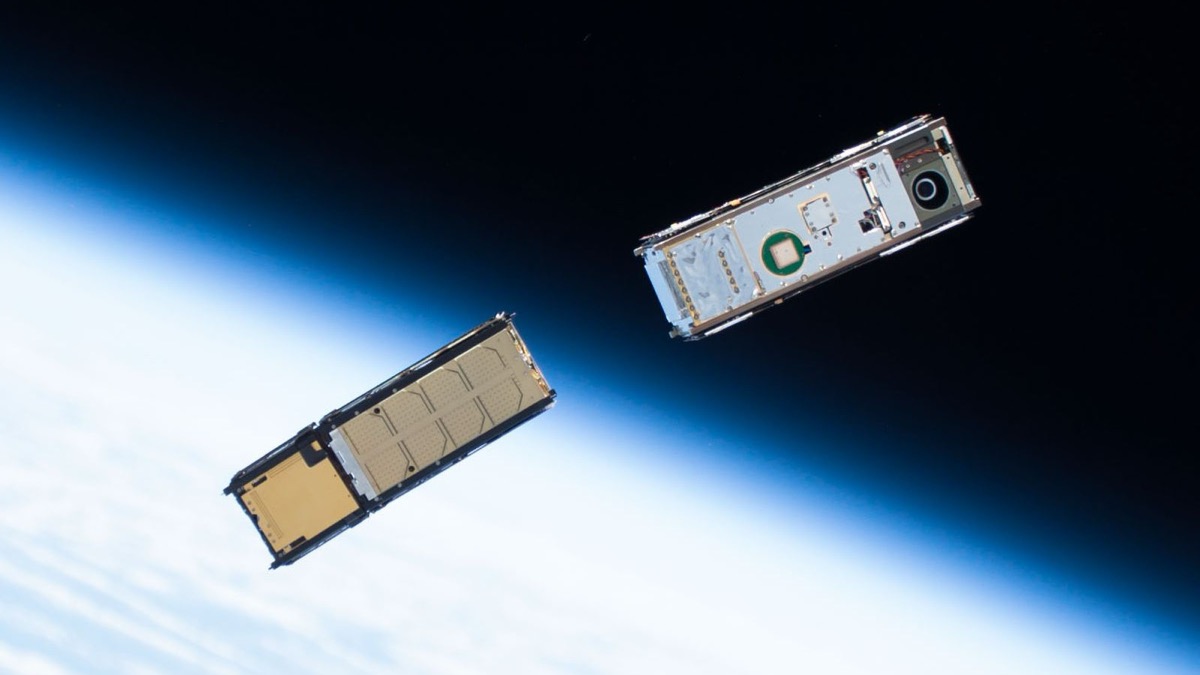
Satellites need stiff, light, thermally stable structures: buses, panels, optical benches, antenna supports and deployment hardware. These are demanding products, but they are closer to the skills already present in Malaysian and Singaporean aerospace supply chains than a LOX or methane tank.
The same logic applies to non-cryogenic launch components: fairings, interstages, payload adapters and solid-motor cases. These are still difficult, but they offer a more credible entry point than trying to qualify a tank dome for a US medium-lift rocket.
Recycled carbon fibre also has a role—but a narrower one. It is better suited to secondary structures, tooling, UAV components and selected satellite parts than to primary cryogenic tank structures.
What Asian founders should build
The winning pitch is not "we can make rocket tanks."
It is: we can make this specific component, to this specification, with this inspection method, and here is our qualification path.
For Southeast Asia, that likely means starting with satellite structures, composite tooling, inspection services and non-cryogenic launch hardware. For Japan and Korea, the opportunity is to deepen existing national launch supply chains. For Malaysia and Singapore, it is to become the composite manufacturing base for the satellite makers, UAV companies and defence suppliers around them.
Rocket Lab’s delay is a useful signal—but not because it proves Asia can fix a US rocket. It shows that the scarce skill is repeatable, inspectable, flight-grade composite manufacturing.
Asia does not need to win Rocket Lab to win here. It needs to win the customers already in its own neighbourhood.
A different way of writing this
This article started with curiosity, not a conclusion: I thought this might be Asia’s opportunity—so why isn’t it?
The answer matters. What is happening in the US does not always match what makes sense for Asia. Asia’s opportunity may be less about copying American launch supply chains and more about building the regional base around satellites, aerospace manufacturing and advanced composites.
That is why Lift Off Asia exists: to ask the questions the industry often skips—Why does a rocket delay matter? Who makes the parts? Where does Asia fit? Those are not naive questions. They are where normalising space begins.
Cover: woven carbon fibre fabric by Acheolg, CC BY-SA 4.0, cropped. This cover is shared under the same licence.
Free. One essay a week. Unsubscribe anytime.