Regional brief · Issue 12
The last station standing: China was locked out of the ISS, so it built its own — and it isn't slowing down.
Barred from the world's space station by a US law, China built its own from scratch. It's a fifth the size — and it just set the record for the longest spacewalk in history. The ISS is heading for the ocean floor; Tiangong is heading the other way. Here's what it is, what it's done, and what China wants to do with it next.
TL;DR
- What's true: Tiangong has been continuously lived in since June 2022 — a compact, entirely home-built station about one-sixth the mass of the ISS.
- Why it matters: as the ISS retires around 2030, China is expanding its station and opening it to the world.
- Watch: Pakistan's first astronaut is training for it and the UN has picked experiments from 17 countries to fly — while the West stays away.
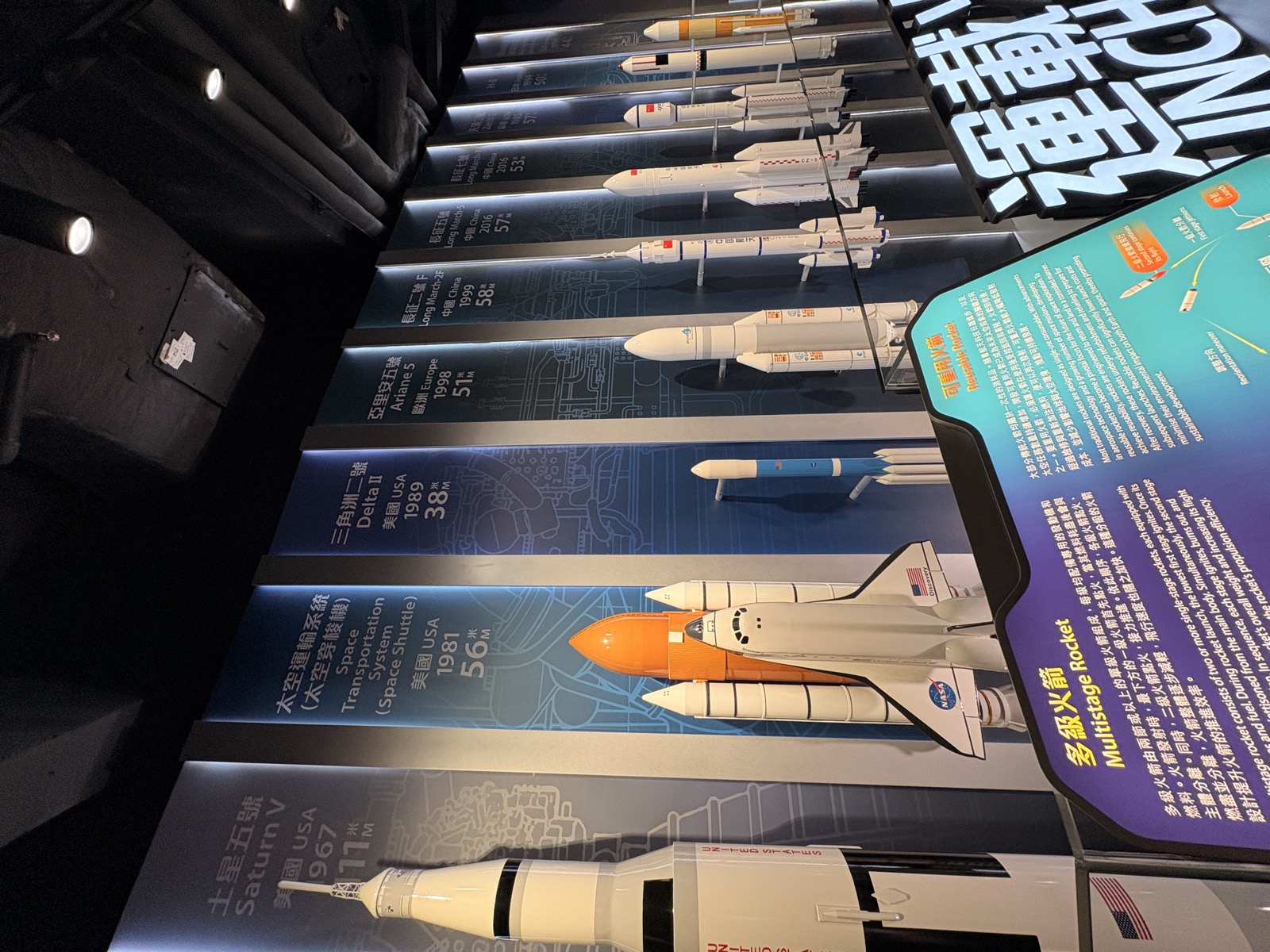
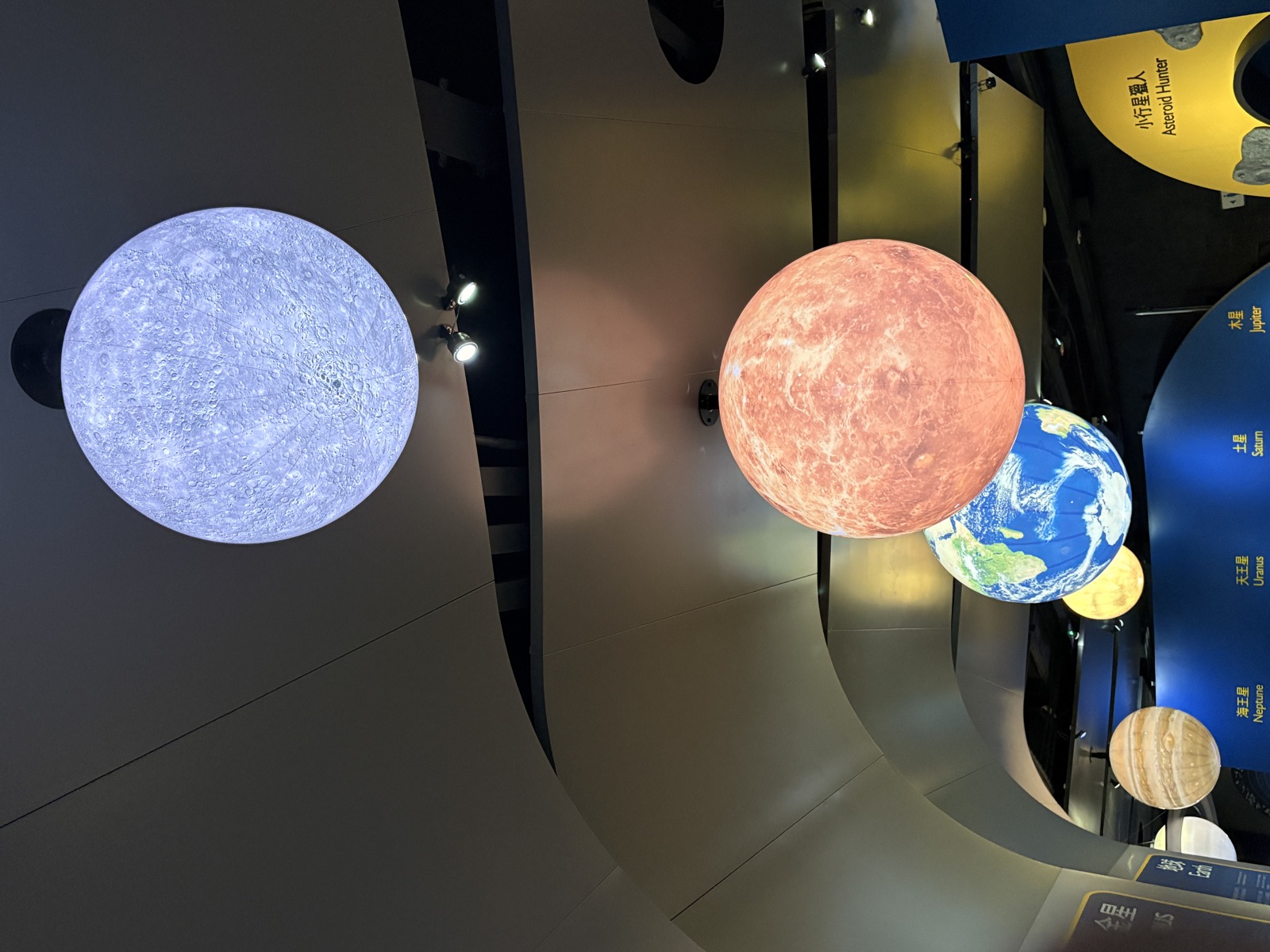
A while back I was at the Hong Kong Space Museum, and I stopped in front of the Tiangong (天宫, "Heavenly Palace") exhibit — a little animation of how the station clicks together in orbit, module by module, like building blocks. I took a video of it.
That July, three people were living inside the real thing, about 400 km overhead. One of them, Lai Ka-ying, was the first person from Hong Kong ever to reach space — a computer scientist, not a career pilot. So there I was in a Hong Kong museum filming a model, while a Hongkonger lived in the real one above the city. Tiangong has been lived in like that, without a single empty night, since 2022.
The odd part is why it's up there at all: China built its own station because it wasn't allowed onto anyone else's.
Locked out, so they built their own
In 2011 the US Congress passed the Wolf Amendment — a law barring NASA from cooperating with China without explicit sign-off from Congress. It's been renewed every year since and still holds today. China had asked to join the International Space Station in 2007 and was turned away on security grounds; the Wolf Amendment sealed the door.
So China built its own. It's a national programme, run through the country's military-led space agency, with taikonauts who are mostly air-force pilots — that's simply how human spaceflight is organised in China. What stays with me is the result: a country shut out of the world's station went and built a fully working one of its own, from scratch, in barely a decade.
What it's made of
Tiangong is three modules, each about 22 tonnes, launched between 2021 and 2022 and joined into a T: Tianhe (天和, "Harmony of the Heavens"), the core where the crew live and fly the station, and two labs, Wentian (问天) and Mengtian (梦天).
It's smaller than you'd expect. The permanent station comes in at around 66 tonnes — roughly one-sixth of the ISS, and closer to Russia's old Mir. It's not an ISS rival by bulk. What it is, is new. China assembled the whole thing in about eighteen months of launches, and it shows: modern flexible solar wings, a 10-metre robotic arm that can "walk" itself around the outside, and a life-support system that, by China's own account, recycles more than 90% of the crew's water.
One piece genuinely is a world first. Tiangong holds its orbit with electric propulsion — xenon Hall-effect thrusters, the efficient low-thrust kind that until now had only ever flown on uncrewed satellites and probes. Every other crewed station, the ISS and Mir included, burned chemical fuel to fight the drag pulling it down. Tiangong is the first with people aboard to do it the efficient way.
What it's done
Since June 2022, someone has always been home — around 23 taikonauts on six-month rotations, including, in 2023, Gui Haichao (桂海潮), the first Chinese civilian ever to fly, a university professor rather than a pilot.
The most striking thing they've done came on 17 December 2024, when Cai Xuzhe (蔡旭哲) and Song Lingdong (宋令东) went outside for 9 hours and 6 minutes — the longest spacewalk in history, beating a NASA record that had stood since 2001. That one isn't Chinese state media talking; it tops the independent record books.
Two experiments are the ones I'd actually bring up at dinner, both about the unglamorous business of keeping living things alive far from home. In 2022, crew grew rice from seed to seed entirely in orbit — a first for the crop. And in 2024, a sealed tank of four zebrafish and some pondweed ran as a self-contained ecosystem for 43 days, over which the fish did the most ordinary, remarkable thing: they bred. (Reported by the Chinese Academy of Sciences, picked up independently by the South China Morning Post and Space.com.)
That work isn't trivia. Growing food and closing a life-support loop are the exact problems anyone — China, NASA, whoever — has to solve to send people further than the Moon. It's groundwork for all of us, done in low orbit.
What they want to do with it next
Here's where it gets interesting — and where China is going the opposite way to everyone else.
The ISS is on a clock: NASA plans to bring it down around 2030, and its commercial replacements haven't flown a crew yet. Tiangong is doing the reverse. China has announced plans to grow it from three modules to six, roughly doubling its size, with a new hub module targeted for around 2027 (announced, not yet flown). It's also building Xuntian (巡天, "Surveying the Heavens") — a Hubble-class survey telescope that will fly alongside the station and dock with it for repairs and upgrades, the kind of servicing Hubble could only ever get from the Space Shuttle. Its job: mapping dark matter and dark energy for anyone who studies the sky.
And China is opening the door it was once shut out of. Pakistan's first astronaut is training in China to fly to Tiangong. The UN has selected experiments from 17 countries — India and Kenya to Mexico and Peru — to run aboard, under a program pitched as "access to space for all." Europe trained astronauts with China years ago but has since backed away; the US, by its own law, can't come. The station the West locked China out of is quietly becoming the one the rest of the world can reach.
The model in the Hong Kong museum doesn't move. The real Tiangong has circled the Earth thousands of times since I took that video, with someone inside the whole way. When the ISS finally comes down, the question won't be who built the biggest station — it'll be who kept the lights on up there, and who they invited in.
Last issue: India's first private rocket reached orbit — from a company that existed before the law did.
Cheers!
— shirley
Free. One essay a week. Unsubscribe anytime.